

 0
0
 0
0
The rapid expansion of artificial intelligence across global industries has moved far beyond automation alone, becoming an essential force in reshaping how teams operate, collaborate, and deliver results. Today’s workforce relies on tools that simplify complex tasks, accelerate decision-making, enhance productivity, and free employees from repetitive workloads. As organizations shift toward smarter systems, AI is no longer viewed as a futuristic concept—it is a practical resource woven into everyday processes that help companies run more efficiently. Businesses across technology, logistics, finance, healthcare, manufacturing, and professional services now leverage AI-powered platforms to gain agility in an increasingly competitive environment. With tools capable of analyzing patterns, forecasting trends, improving accuracy, and supporting human workers, AI has become central to innovation strategies worldwide. This transformation is not driven solely by cost reduction but by the desire to empower people to work in more meaningful, strategic, and creative ways. As industries continue to evolve, AI-enabled workforce solutions remain at the heart of this progression.
AI as a Productivity Multiplier in the Modern Workplace
The introduction of AI-powered workforce tools has fundamentally changed how organizations measure and enhance productivity. Instead of relying solely on manual processes, companies now integrate intelligent systems that streamline workflows, automate administrative tasks, and support employees in making informed decisions. AI has become especially useful in environments where time-sensitive analysis plays a critical role. For example, sales teams use predictive algorithms to forecast demand, healthcare facilities employ automation to manage patient records more efficiently, and logistics companies rely on optimization systems to increase delivery accuracy. These tools work behind the scenes, ensuring that essential tasks are completed faster and with fewer errors.
What makes this shift so important is the way AI complements human roles rather than replaces them. Workers benefit from reduced workloads, clearer insights, and more capacity to focus on strategic responsibilities. Managers gain real-time visibility into operations, while teams experience smoother communication and more organized task management. This transition supports the ongoing demand for agility and responsiveness in competitive markets. As industries expand, the ability to leverage global business insights becomes a significant advantage, helping teams operate with clarity while maintaining high standards of performance. The result is a streamlined, intelligent workplace driven by collaboration between human expertise and digital efficiency.
AI and Decision Intelligence: Enhancing Strategic Planning
Decision intelligence has emerged as one of the most transformative applications of AI in modern organizations. Instead of basing strategies solely on instinct or historical behavior, companies now depend on systems that interpret real-time data, evaluate multiple scenarios, and present actionable recommendations. This shift helps leaders anticipate risks, identify opportunities, and respond to market changes with greater confidence. The technology does more than process information—it contextualizes it, allowing decision-makers to understand why certain patterns occur and how they can influence different outcomes.
Industries across finance, supply chain management, and telecommunications have seen significant improvements in planning accuracy thanks to AI-driven modeling tools. These systems analyze consumer activity, economic trends, and operational patterns to forecast future performance with remarkable precision. The result is strategic planning rooted in data rather than speculation. This enhances organizational resilience, enabling leaders to prepare for uncertainty while optimizing resources. By integrating AI into core decision-making processes, businesses gain a competitive edge that allows them to navigate evolving market landscapes with stronger foresight and adaptability.
Reinforcing Employee Support and Workplace Well-Being
An unexpected yet powerful benefit of AI-powered workforce tools is their contribution to employee well-being. Modern platforms can identify workload imbalances, flag signs of burnout, and provide personalized recommendations aimed at improving daily routines. HR departments increasingly rely on AI-supported systems to track engagement patterns, measure satisfaction levels, and understand what employees need to stay motivated. These tools encourage healthier work environments by providing leaders with actionable insights that were previously difficult to access.
Incorporating AI into wellness and support programs helps organizations respond more effectively to evolving workplace expectations. Real-time analytics allow teams to adjust schedules, distribute tasks evenly, and establish healthier boundaries between work and personal life. This not only strengthens morale but also reduces turnover and improves long-term productivity. As businesses refine their cultures, many look to trusted digital tools that align with modern communication habits. Woking Press has observed a widespread trend of companies adopting technology that enhances collaboration and strengthens emotional well-being, highlighting the shifting priorities of the global workforce. These evolving strategies reflect the same values found in a modern news platform, where clarity, balance, and accessibility remain central to supporting readers—and, increasingly, to supporting employees as well.
Industry-Specific AI Adoption and Its Broader Impact
AI adoption varies across industries, yet its impact remains consistently transformative. Manufacturing relies heavily on automation and predictive maintenance systems that minimize downtime and improve safety conditions. Healthcare embraces AI-powered diagnostic tools that assist medical teams in identifying health risks earlier and with greater accuracy. Financial institutions utilize machine learning to detect fraud patterns, enhance customer service, and refine credit assessment models. Each sector uniquely leverages AI to elevate performance, accuracy, and customer experience.
What unites these sectors is the way AI improves workflow reliability and scalability. Warehousing operations rely on robotics and smart inventory systems to handle fluctuating demand. Creative industries utilize AI-assisted tools for content organization and audience trend analysis. Professional services depend on digital assistants to manage documentation and streamline client interactions. Across the board, organizations experience improved operational clarity and reduced complexity. The broader impact of this trend is the emergence of smarter, more adaptive industries that learn from data rather than merely reacting to it. This evolution sets a foundation for new standards of efficiency and innovation across global markets.
The Future of AI-Enhanced Workforces: Collaboration Over Replacement
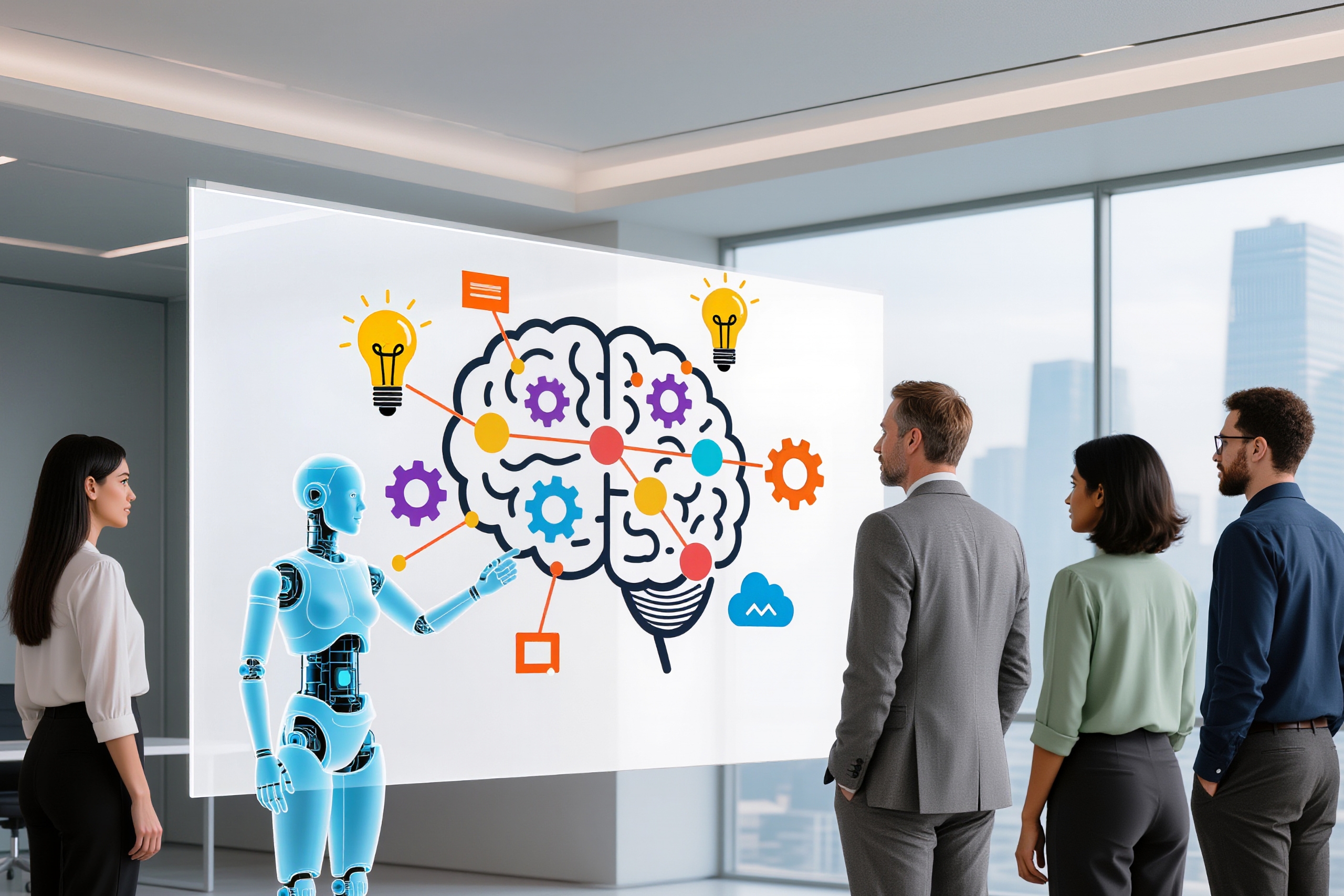
Although some early discussions around artificial intelligence focused on job displacement, today’s trajectory highlights a different narrative: collaboration. AI-powered tools are increasingly positioned as partners rather than replacements, supporting employees by enhancing accuracy, reducing repetitive workloads, and expanding creative possibilities. Workers gain access to digital assistants, intelligent dashboards, and real-time communication channels that simplify complex responsibilities. This shift allows teams to reach higher levels of performance while spending more time on meaningful tasks that require human insight.
Organizations that prioritize collaboration between people and AI report improved innovation, stronger teamwork, and clearer role distribution. As automation handles predictable tasks, employees are empowered to focus on strategy, analysis, and relationship-building—skills that remain uniquely human. Looking ahead, the future of AI-enhanced workplaces is likely to be grounded in balance rather than competition, where technology becomes an enabler of personal growth and business development. This collaborative approach strengthens productivity while supporting the evolving expectations of the modern workforce.

Conclusion
AI-powered workforce tools are reshaping global industries by elevating productivity, supporting informed decisions, and enriching the employee experience. As businesses adopt intelligent systems to streamline processes and analyze real-time data, they begin to operate with more clarity and adaptability in competitive markets. Industries across healthcare, manufacturing, finance, logistics, and professional services continue to discover new benefits of integrating AI into their operational models. These tools not only enhance efficiency but also encourage healthier workplaces, clearer communication, and stronger long-term planning. As organizations evolve, the role of AI becomes less about replacing human labor and more about empowering individuals to contribute in meaningful, creative, and strategic ways. With the right balance between innovation and human value, AI-enabled workforces offer a path toward stronger industries, more resilient businesses, and improved working environments worldwide. The transformation underway reflects a larger global commitment to smarter collaboration, shaping a future where technology and people thrive together.


